







Review Ledger
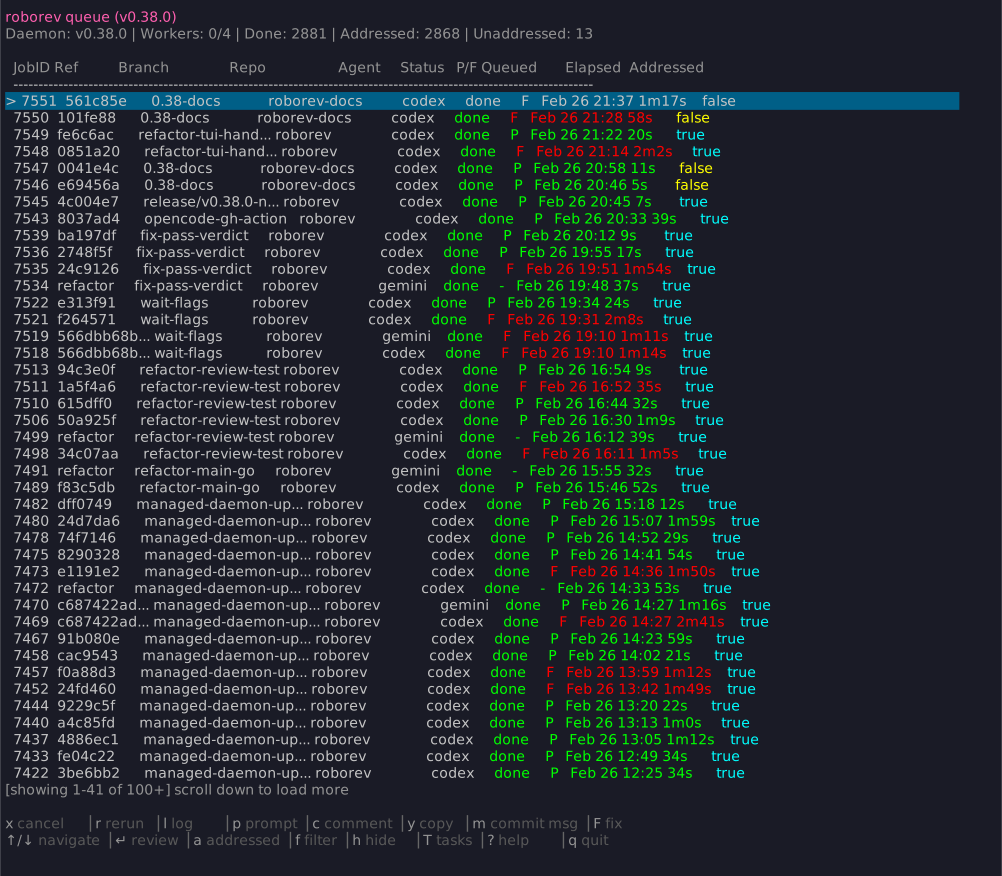
Every commit is reviewed automatically via git hooks. Reviews accumulate in a persistent queue that acts as a ledger: nothing is closed until explicitly addressed.
curl -fsSL https://roborev.io/install.sh | bashThen from within your git repositories:
roborev init # Install post-commit hook# do some work, generate commitsroborev tui # Browse reviews in the terminal UIFor Windows, see the installation guide.
AI coding agents write code fast, but they make mistakes. Most review feedback comes too late. The agent has moved on and context is lost. roborev changes this:
roborev tui) to browse findings as they arrive/roborev-fix, or running roborev fixEvery commit gets reviewed. Issues surface in seconds, not hours. Open reviews stay in the TUI queue until explicitly addressed and closed, so nothing falls through the cracks.
Review Ledger
Every commit is reviewed automatically via git hooks. Reviews accumulate in a persistent queue that acts as a ledger: nothing is closed until explicitly addressed.
Agent-Ready Feedback
Copy findings into your agent session, use /roborev:fix skills, or run roborev fix to apply fixes automatically.
Code Analysis
Built-in analysis types (duplication, complexity, refactoring, test fixtures, dead code) that agents can address directly.
Multi-Agent
Works with Codex, Claude Code, Gemini, Copilot, OpenCode, Cursor, Droid, Kilo, Kiro, and Pi. Auto-detects installed agents.
Rich Markdown Display
Reviews render with full Markdown formatting: syntax-highlighted code blocks, headings, lists, and inline styles, right in your terminal.
Runs Locally
No hosted service or additional infrastructure. Reviews are orchestrated on your machine using the coding agents you already have configured.
Multi-Machine Sync
Bi-directionally sync reviews across machines via PostgreSQL.
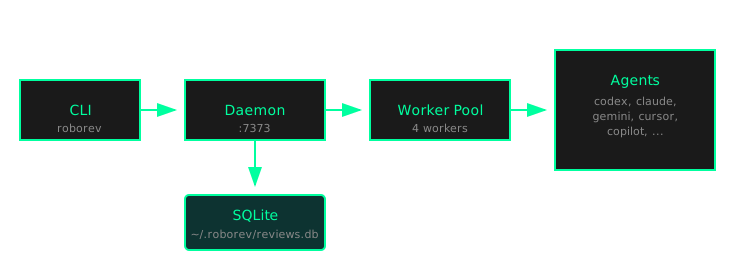
~/.roborev/reviews.db with WAL mode~/.roborev/config.toml, per-repo at .roborev.toml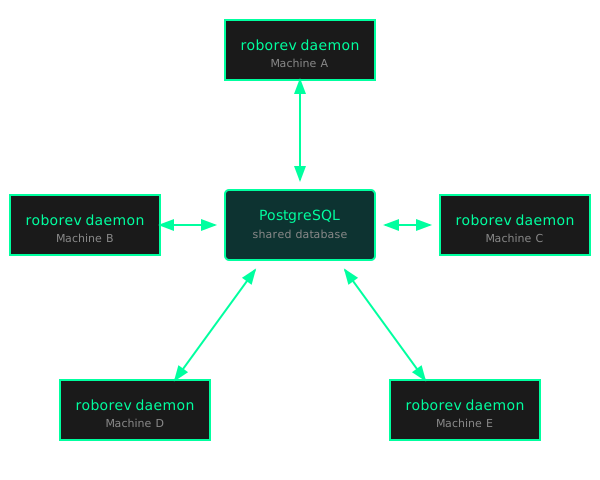
Bi-directionally sync reviews across machines with a shared PostgreSQL database. Each daemon maintains its local SQLite for fast access while syncing changes to the central database.